
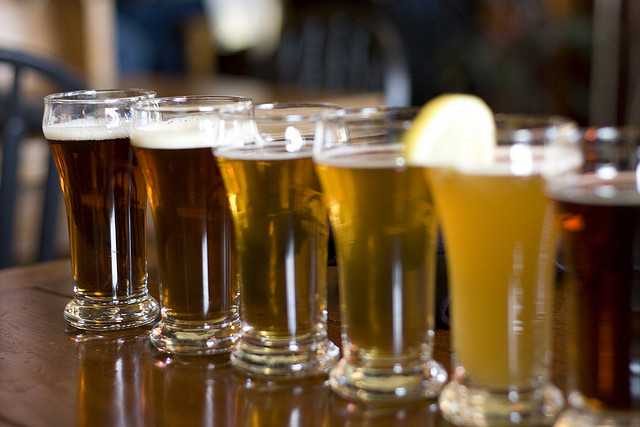
Beer flavonoid could boost brain power
Researchers at Oregon State University found that that doses of xanthohumol, a flavonoid found only in hops, was capable of improving the memory and thought patterns in a group of mice.
The aim of the study was to find out it the flavonoid could slow down palmitoylation – a natural process associated with memory degradation in animals and humans, as reported by Quartz.
A group of young and old mice were put on an eight-week diet of xanthohumol before being put through a series of tests to gauge whether or not the treatment had improved their spatial memory and cognitive flexibility.
Within the younger group of mice, cognitive flexibility significantly improved, however, older mice were found to be immune to its effects.
Flavonoids are a class of compounds found only in plants with Xanthohumol particularly rare with its only known dietary source being hops.
While encouraging, a human would have to drink roughly 2,000 litres of beer a day to get the same dosage of xanthohumol that the mice received, and even then it is likely only to have a positive effect on the young.
However, the study does raise the possibility of one day harnessing the compound to treat cognitive problems in humans.
The researchers said: “The young xanthohumol-treated mice showed a significant improvement in cognitive flexibility. However, this appeared to be associated with the young control mice, on a defined, phytoestrogen-deficient diet, performing as poorly as the old mice and xanthohumol reversing this effect. The old mice receiving xanthohumol did not significantly improve their learning scores. Xanthohumol treatment was unable to affect the palmitoylation of NMDA receptor subunits and associated proteins assessed in this study. This evidence suggests that xanthohumol may play a role in improving cognitive flexibility in young animals, but it appears to be ineffective in adjusting the palmitoylation status of neuronal proteins in aged individuals.”
The research was published in the journal of Behavioural Brain Research.
The Drink Business

