
I love a flat-roofed pub
I was born in the 1970s. I like things from that era, and so do a lot of other people. This is evident by the huge price increases of vintage computer games, vinyl records, band tee shirts and mid-Century furniture. When people reach middle age, they have the money to revisit the sights and sounds of their youth.
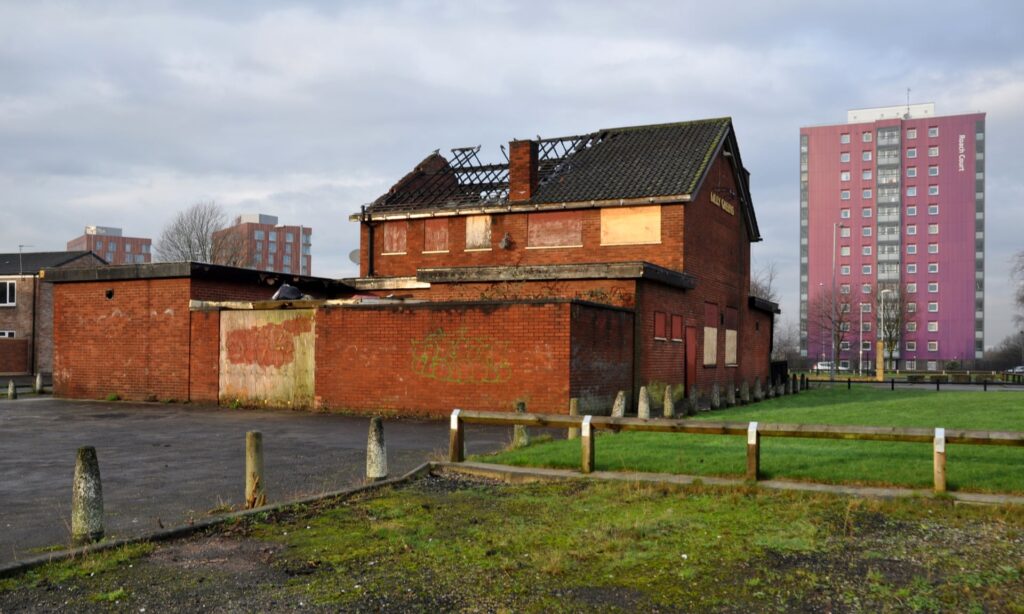
A flat-roofed pub harks back to the sights and happy memories of my childhood. The post-war modern streets and estates were and are a truly beautiful and unpretentious thing. Bright and airy after the darkness of the Second World War. Naysayers would say that they epitomised function over form. Is that such a bad thing? Buildings from that era maximised space and light, and minimised decoration and fanfare.
Did the naysayers have things upside down? Just wait a few years, and you will realise that the seeming lack of form was the form. Just look at everything created by the Bauhaus. The form could be seen as a triumph, as illustrated by the brutalist movement.
And in a perverse way, the function that was primary could now be seen as a failure, as illustrated by the downfall of the 60s housing estate.
A 60’s house in an Edwardian street is like a blinding light piercing the grey. Was it built by someone who bought a plot of land from a house with an excess of garden space? Was it built in a space where a wartime bomb fell? Who chooses to make a modern building in the middle of an historic street?
A flat-roofed pub in a London Street seems like a small child, lost in a crowd of adults. Looking up at the giants who surround it.
The flat-roofed and estate pubs built after the war make me want to cry with an enormous sense of well-being and sadness in equal measure.
The sadness is the unstoppable loss of these venerated institutions, an architectural style not appreciated, a class of establishment dismissed as a blot on the modern landscape.
The sense of well-being I feel is the tenacity of the remaining pubs, to cling on to the life that fed them when times were good and to reach for the life that will once more, surely feed them in the future. Two fingers to the short-sighted greed of the property developer. Let’s hold our breath and see if we can weather the storm. On the other side, we can emerge victorious.
All eras and things are loved as modern, hated as old-fashioned, loved as vintage, adored as antique, and then venerated as historical. You can read about this in the book Rubbish Theory: The Creation and Destruction of Value by Michael Thompson
The problem with all design, buildings, cars, fashion, and physical media is that you won’t know what you have lost until it is gone. Only when there are very few of these pubs left will they be seen as a wonderful punctuation mark of the decade that created them.




Read More:
The rapid closure of Manchester’s postwar estate pubs – once seen as a vital part of the community – is leaving neighbourhoods without a social anchor
Source: ‘Never drink in a flat-roofed pub’: how the old joke became a reality | Cities | The Guardian

